
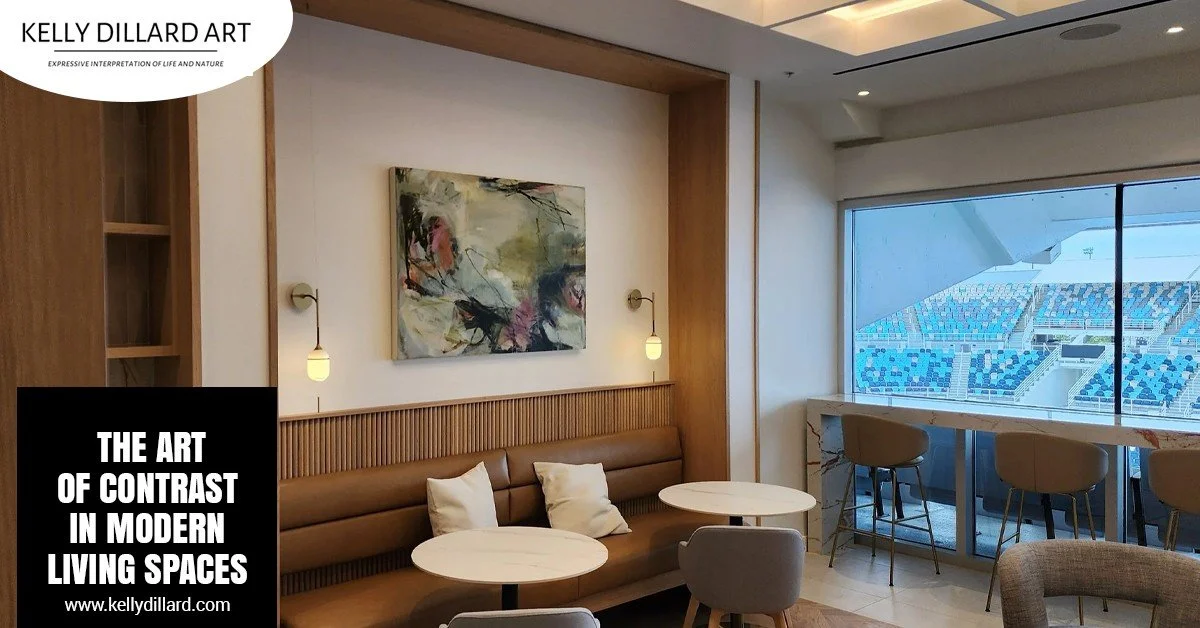
I see contemporary abstract art as a conversation between different elements. Light and dark, movement and stillness, and bold shapes and loose brushstrokes can all work together. These contrasts can create something unexpected. As an abstract artist, I use these elements to explore different ideas and experiences. I do not follow a fixed visual formula. Instead, I let each painting take shape through color, texture, and form.
This use of contrast also makes contemporary abstract art for interiors so interesting. A painting does not have to match the colors or patterns in a room. It can introduce a fresh visual element. It can also create balance or change the feel of a familiar space. I believe strong artwork should add character to a room. It should also hold on to its own identity.
Why Does Contrast Make Abstract Artwork More Interesting?
For me, contrast creates the rhythm of a painting. Various elements play together and lead the spectator's gaze through the painting. A bold color can be used against a subdued color. A soft, brushy stroke can add interest beside a sharp stroke. An area that is detailed and up close to an open space can look stronger.
It is also possible to use contrast to enhance the sense of depth. Colors, shapes, and textures can imply movement, tension, or relaxation. They don't need to see objects to have these effects. They may be derived from the interactions of the various elements on the canvas.
How Can Contrast Work in Contemporary Interior Spaces?
The one thing I believe is needed to make a successful interior is for it not to look the same in every part of the home. A neutral colour palette can be complemented with vibrant artwork. If you have a room that is brightly decorated, you may need to have something calmer. In the above context, the type of artwork that has soft colors and layers of form can provide balance.
When choosing a painting for a room, I suggest looking at a few practical details:
The wall size and the amount of open space around the painting.
How the artwork's colors work with the existing furniture.
The amount of natural light and how it affects different tones.
The composition and the focal point it creates.
The overall mood you want the room to express.
I also feel that the final decision should be based on personal preference. Paint colors do not always harmonize with all furnishings in a room. That's not to say that it's not the right option. To be honest, a surprising contrast will create an even more memorable interior. It can also provide a personal touch to the space.
Making Space for Art That Challenges the Expected
I feel that a painting should have more to it than appearance. It can bring in new ideas and set a new tone. Contrast, texture, and unexpected colors can add distinct character to a room. These components can help to enrich an artwork's lifespan as well.
When viewing modern abstract art for interior spaces, the consumer will have an opportunity to reflect on the use of original paintings in their home. The right piece can alter the ambiance of a room. It can provide an extra focal point every time people view it.
My original paintings through Kelly Dillard Art are formed by color, texture, movement, and personal experiences. The pictures in each of the collections take a different visual approach. This enables the viewers to view works that resonate with their preferences and point of view.
Ultimately, I see contemporary abstract art as a way to bring a fresh perspective into everyday spaces. It does not have to follow changing interior trends. Instead, it can reflect personal taste and remain meaningful for years to come.
Frequently Asked Questions
1. What defines contemporary abstract art?
Contemporary abstract art uses nonrepresentational forms, color, texture, and composition to express ideas and experiences.
2. How should I choose abstract artwork for my home?
Choose artwork by considering its scale, palette, placement, lighting, and the atmosphere you want created.
3. Does abstract art need to represent recognizable objects?
Abstract art can suggest feelings, movement, memories, or ideas without depicting recognizable objects or scenes.
4. What is a focal point in interior design?
A focal point is a visually prominent feature that naturally draws attention within a room.
5. How can I select the right painting size?
View paintings in different lighting and compare their scale with furniture and available wall space.