
How Color Turns Emotion into Abstract Art
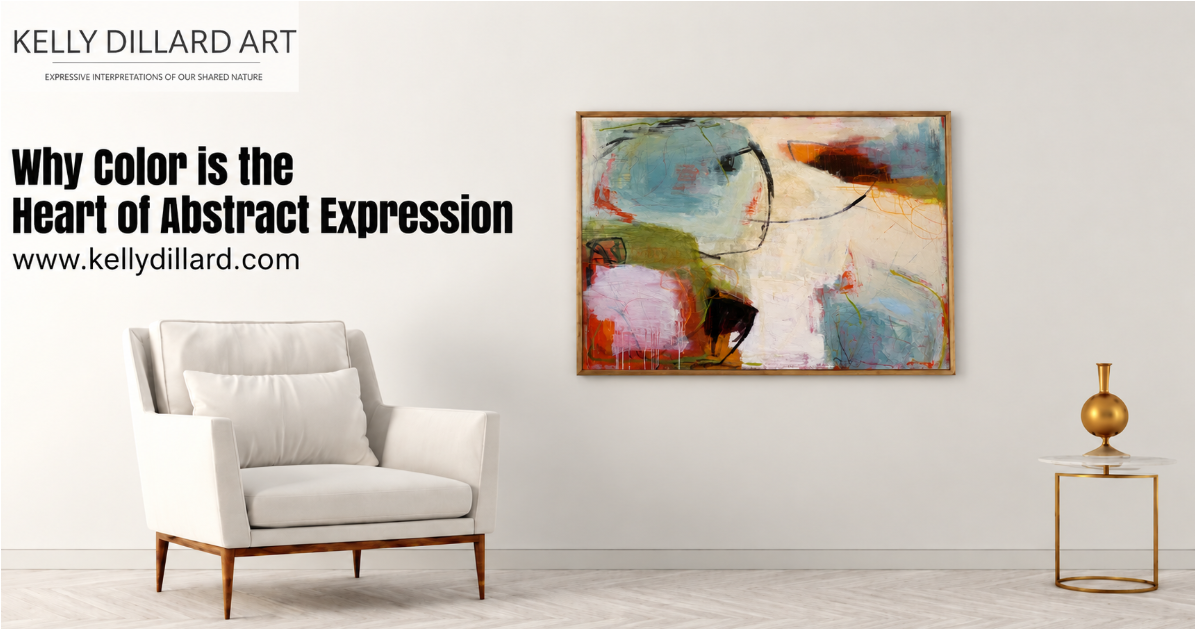
Color can alter your feelings about a location, a memory, or even a fleeting moment. A deep blue shade might evoke calm water, and a flash of orange could represent movement or heat. I am Kelly Dillard, and I am an abstract expressionist artist. I use these emotional connections to guide my creative process, turning observations and feelings into original abstract artwork. My chromatic abstract paintings explore how color can communicate an experience without relying on recognizable objects or traditional scenes.
I treat every painting like I'm finding out something, instead of painting something that I know. Using layers of color, expressive marks, and varying textures, I explore the connection between what I see in nature and how I feel. The outcome is pieces that encourage viewers to draw their own conclusions.
How Can Color Communicate Without Telling a Story?
In abstract expressionism, color may be used to suggest a theme or message without depicting a particular object. I can create movement with contrasting tones and/or calmness with other color relationships. The emotional reaction will be determined by the relationship of the colors, their location, and their direction of eye movement over the surface.
I'm not making decisions with a set formula. The composition can shift in the process of the painting, with the beginning colors or gestures changing as the painting evolves. On some occasions, the most significant aspect of the job is a random mix.
This process gives me the freedom to explore feelings without making them too specific. One spectator may feel a sense of energy in a painting, another a sense of uncertainty, a third a sense of peace, a fourth a sense of nostalgia. Any abstract art will have room for individual interpretation, making both responses to the question meaningful.
What Makes Chromatic Abstract Paintings Visually Engaging?
When the elements of artwork are combined, they can become expressive in color. When creating a composition, I think about contrast, balance, texture, spacing, and movement. A light spot can be the focus, and a darker part can allow the eye to rest. The relationships provide depth and prevent colour from becoming 'noise'.
My chromatic abstract paintings attempt to utilize these possibilities with the use of brilliantly colored tones, soft gradations, and layered surfaces. Also, I'm aware of how colors affect one another. A muted color could look like it is the stronger color when placed next to a bright color, or the same color can help create a sense of unity across the canvas.
Several elements influence the final composition:
Contrast: Creates visual tension and directs attention.
Layering: Adds depth and preserves traces of the painting process.
Texture: Introduces variation that can be appreciated up close.
Color relationships: Establish harmony, movement, or a sense of disruption.
Negative space: Gives active areas room to stand out.
These choices allow me to create paintings that remain interesting beyond their initial color impact.
Why Does Personal Interpretation Matter in Abstract Expressionism?
I want people not to be expected to find a subject or the one "right" interpretation of my paintings. Rather, I invite them to observe their attention and which colors catch their eye, or which emotions arise when spending time with the artwork.
There is also the case of the painting having another meaning over time. The colors may start out stimulating and then become soothing, and a specific combination of forms can evoke a recollection. These are some of the reasons behind abstract art being a good addition to life's activities.
My artwork deals with how color, texture, and movement can transform personal observations into a shared visual experience. My original paintings at Kelly Dillard Art invite viewers to explore abstract expression in their own way. Each composition is not a static story but one that allows discovery, so looking becomes as much part of the experience as is the art itself.
Frequently Asked Questions
1. What is abstract expressionism?
Abstract expressionism is an art movement that emphasizes emotion, spontaneous gestures, color, and individual artistic interpretation.
2. How does color influence emotions in art?
Color can influence mood through contrast, intensity, tonal relationships, and associations with personal experiences or familiar environments.
3. What are chromatic abstract paintings?
Chromatic abstract paintings emphasize color relationships, using hues, contrast, texture, and composition instead of recognizable subjects.
4. How should I choose abstract artwork for my home?
Consider wall dimensions, lighting, existing colors, personal preferences, and the atmosphere you want the artwork to create.
5. Why do abstract paintings have different meanings for viewers?
Abstract paintings encourage individual interpretation, allowing viewers to connect colors, textures, and forms with their own memories and emotions.